Modernizing Legacy Banking Cores: Automated SOAP to REST Orchestration for Fintech
Over 70% of US banks still run payments on decades-old mainframes that expose only SOAP APIs. This guide shows how automated SOAP to REST orchestration modernizes legacy banking cores using the Strangler Fig pattern, Anti-Corruption Layers, and Engini AI, without replacing the ledger or risking production disruption.
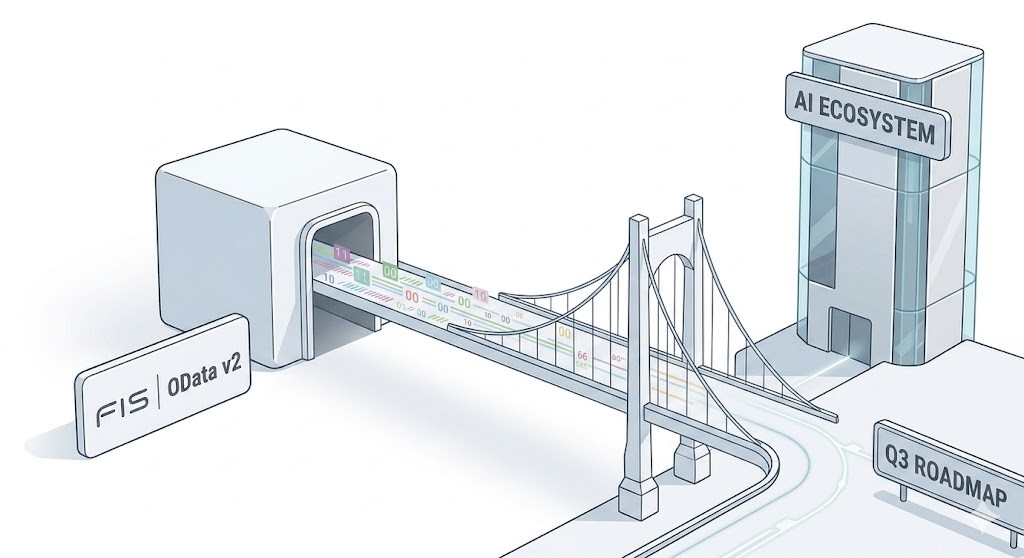
Over 70% of US banks still run payments on decades-old mainframes. These legacy cores handle high transaction volumes every day. But they only expose SOAP APIs. Fintech partners cannot use them natively. Automated SOAP to REST orchestration fixes this gap, without replacing the ledger.
ISO 20022 deadlines are tightening. Real-time payment mandates keep expanding. Automating the translation layer between SOAP and REST gives your fintech partners a clean integration surface. Engini's AI Workers run multi-step workflows across enterprise systems. They connect to 1,000+ native integrations. They handle the mapping and translation work that slows legacy modernization. You no longer need months of custom middleware builds.
This guide covers four key approaches: the Strangler Fig pattern, Anti-Corruption Layers, dual-run data sync, and monolith decomposition. Each step is incremental and risk-managed.
How US Banks Are Revamping Payments Core Systems with Minimal Disruption
Still running payments through a batch-oriented mainframe? FedNow's real-time clearing windows are already creating revenue gaps you can measure. Legacy core drag now means lost revenue, not just technical debt.
A LinkedIn post on banking infrastructure evolution shows the pattern clearly. Banks that layer modern orchestration over stable ledgers outpace those trying full replacements. A mid-tier US core replacement takes multiple years. That means elevated production risk every single quarter.
SOAP to REST orchestration sits at the center of the layered approach. You deploy platforms that parse WSDL definitions, generate REST wrappers, and manage protocol translation at runtime. Engini's AI Workers handle the repetitive SOAP-to-REST mapping tasks. This pattern cuts integration timelines from months to days.
The “Technical Debt” Roadblock: Beyond Manual Mapping
Many IT teams hit a wall during manual migrations. The “wrong SOAP version SAP” error and WSDL mismatches are common culprits. These aren't just bugs, they kill projects. They stall modernization for months. They drain engineering time that should go toward building new services.
Engini's orchestration layer handles version negotiations automatically. It parses WSDL definitions and manages protocol translation at runtime. No manual code changes are needed.
Strategic Comparison: Engini AI vs. Legacy Middleware
Many teams default to a legacy iPaaS. But SOAP to REST conversion in MuleSoft often leads to the “MuleSoft Trap.” That means high vCore costs, proprietary DataWeave complexity, and 12-month delivery timelines. Every compliance deadline becomes a liability.
Logic Mapping
Legacy iPaaS (MuleSoft/Boomi): Manual DataWeave / Scripting
Engini AI Orchestration: Agentic / Deterministic AI
Protocol Conversion
Legacy iPaaS (MuleSoft/Boomi): Complex “Conversion” Projects
Engini AI Orchestration: Instant “Bridge & Build”
Time-to-Value
Legacy iPaaS (MuleSoft/Boomi): 6–12 Months
Engini AI Orchestration: < 30 Days
Version Handling
Legacy iPaaS (MuleSoft/Boomi): Manual (Risk of “Wrong SOAP Version”)
Engini AI Orchestration: Automated Version Negotiation
Cost Model
Legacy iPaaS (MuleSoft/Boomi): High Licensing & Developer Overhead
Engini AI Orchestration: Outcome-Based / ROI-Positive
Why a Select Few Banks Still Opt for Full Core Replacement
Full core replacement is rare. It creates massive challenges across compliance, data migration, and production continuity. But some triggers push institutions past the tipping point:
- The legacy data model stores account holder data as unstructured text blocks. This blocks ISO 20022 compliance.
- Regulatory mandates require changes the platform cannot physically support.
- A merger or acquisition creates a restructuring event that justifies the cost.
- 24/7 uptime requirements conflict with mandatory batch-processing windows.
Why Layered Modernization Has Become Industry Standard
Layered modernization keeps your stable ledger intact. You strip legacy platforms down to core accounting functions. New cloud SaaS services then handle payment orchestration, customer channels, and analytics.
This model breaks the cycle where customization blocks upgrades. Standardization becomes your competitive edge. Cloud providers now deliver resiliency, availability, and scalability better than most banks can build on their own.
Designing Banking Tech for Uncertain Market Futures
You can't predict every payment rail, compliance rule, or digital asset format you'll need to support. Tokenized deposits, stablecoins, and new real-time schemes will test every system built today. An API-first strategy is your only reliable hedge.
Key Modernization Traits
- Treat modernization as a risk management and business model decision.
- Invest in clean data models and API-first integration as strategic assets.
- Adopt standardized cloud services instead of building proprietary solutions.
Partner and Vendor Opportunities
Every rip-and-replace event opens a door for vendors. Those who deliver iterative upgrades without production disruption win the business.
Enabling Seamless Migration from Legacy Banking Systems
A safe legacy migration needs layered safeguards at every phase. You run dual environments where old and new systems process transactions in parallel. An orchestration layer routes traffic between them.
The Strangler Fig pattern governs most core banking migrations in 2026. An API gateway intercepts all incoming requests. At first, everything routes to the legacy system. As each new microservice passes validation, that function's traffic shifts over. No downtime required.
Integration and Modernization Strategies for Legacy Core Banking Platforms
Three architectural patterns form the backbone of zero-downtime migration. Each handles a different dimension: traffic routing, model isolation, and data consistency.
1. Zero-Downtime Patterns for Core Banking Migrations
The Strangler Fig pattern routes specific feature requests to new services. Legacy handles everything else. Canary deployments shift just 1% of traffic first. Blue-green deployments keep two identical environments ready for instant rollback.
1.2 Anti-Corruption Layer: Safeguarding New Systems
An Anti-Corruption Layer is a translation boundary. It stops legacy data models from contaminating new domain designs. It converts SOAP XML payloads into RESTful JSON. It maps legacy fields to modern aggregates. It handles translation between incompatible protocols.
1.3 Approaches to Data Migration and Synchronization
A dual-run environment needs real-time bidirectional data sync. Change Data Capture tools stream transaction-log changes to new services via Apache Kafka. The Transactional Outbox pattern guarantees atomicity. Sagas manage multi-service updates with compensating transactions when steps fail.
Breaking Down Monoliths: Shaping Modern Microservices for Banking
Monolith decomposition turns a single codebase into autonomous services. Each service aligns with a business domain. Domain-Driven Design (DDD) is the methodology. You find bounded contexts through workshops. Then you extract each context into its own microservice.
Here's a real example. A bank runs a monolithic COBOL platform. It extracts its customer onboarding module first. Before extraction, one change to onboarding logic means testing the entire codebase. After extraction, the onboarding service deploys on its own. Release cycles drop from weeks to hours.
Mapping Banking Microservices with Domain-Driven Approaches
Identifying Service Boundaries: Defining Bank Subdomains
Event storming workshops map subdomain boundaries. They trace domain events and commands across business processes.
Example Bounded Contexts
- Account management
- Loans and origination
- Customers and identity
- Fraud detection and scoring
Organize Your DDD Workshops and Build a Shared Business Language
Cross-functional teams build a shared vocabulary through event storming. Bring loan officers, compliance staff, and developers into the same room. Use sticky notes or digital boards to map domain events, commands, and aggregates for each subdomain.
Begin With a Pilot Domain for Initial DDD Success
Pick a high-complexity, manageable-risk pilot domain for your first extraction. As described in this re-platforming blueprint on Medium, starting with a contained subdomain like customer onboarding generates quick wins. Those wins secure funding for later phases.
Avoiding the Pitfalls of Distributed Monoliths in Banking
A distributed monolith happens when microservices stay tightly coupled. They share databases, chain synchronous calls, and deploy together. You must design for true service autonomy from day one.
Recognizing and Addressing Tightly Coupled Microservice Failures
- Chained synchronous calls across three or more services
- A shared database accessed by multiple services
- Coordinated release schedules requiring simultaneous deployment
Establishing Real Service Autonomy: Independent Deployments
Each service owns its state through a database-per-service model. It scales independently of all other services.
Leveraging Asynchronous Communications for Decoupled Systems
Pub/Sub patterns and message queues replace synchronous REST calls between internal services.
Applying Domain Event Patterns for Bank Microservice Loosening
Domain events broadcast state changes as immutable facts. Consuming services react without needing a synchronous response.
Conclusion and Next Steps
Automated SOAP to REST orchestration modernizes legacy banking cores without disrupting production. The Strangler Fig pattern, Anti-Corruption Layers, and event-driven data sync give US banks a clear path forward. Each phase reduces risk and delivers independent value.
Start by auditing your current SOAP endpoints. Map them against your fintech partner API requirements. Then follow these steps:
- Find your first bounded context. Run a DDD workshop with your domain experts.
- Deploy a pilot orchestration layer. Translate your highest-volume SOAP service into a RESTful endpoint.
- Evaluate Engini's AI Workers and 1,000+ native integrations. Cut manual mapping work and avoid legacy middleware traps.
Start with one service. Prove value. Scale from there.
Frequently Asked Questions
What is a legacy core banking system?
A legacy core banking system is a mainframe-based platform. Most were built in COBOL between the 1970s and 1990s. They manage core bank operations: deposits, withdrawals, loans, and account records. These systems use SOAP-based APIs. They can't connect natively to modern REST-consuming fintech apps. Updating them requires developers who know decades-old codebases.
What is banking legacy system modernization?
It's the process of moving from rigid mainframe apps to modular, cloud-native architectures. You strip the old platform down to its stable ledger function. Then you layer modern services around it. This avoids the risk of a full replacement. Teams extract bounded features into microservices, deploy API gateways, and use Change Data Capture for real-time database sync.
Are core banking systems under fire in 2025?
Yes. Legacy core platforms face pressure from every direction. Industry surveys show they block innovation and prevent banks from meeting real-time payment mandates. Digital-native competitors scale faster. They built on cloud-native cores from the start.
What will the next generation of FinTech & banking look like?
It will combine predictive analytics, autonomous decisioning, and self-healing infrastructure. Deeper fintech-bank integration through Banking-as-a-Service will let non-bank players build embedded finance products on shared core platforms. Core transformation shifts from an IT project to a strategic priority. Banks that treat their orchestration layer as a product—not a project—will lead this transition.