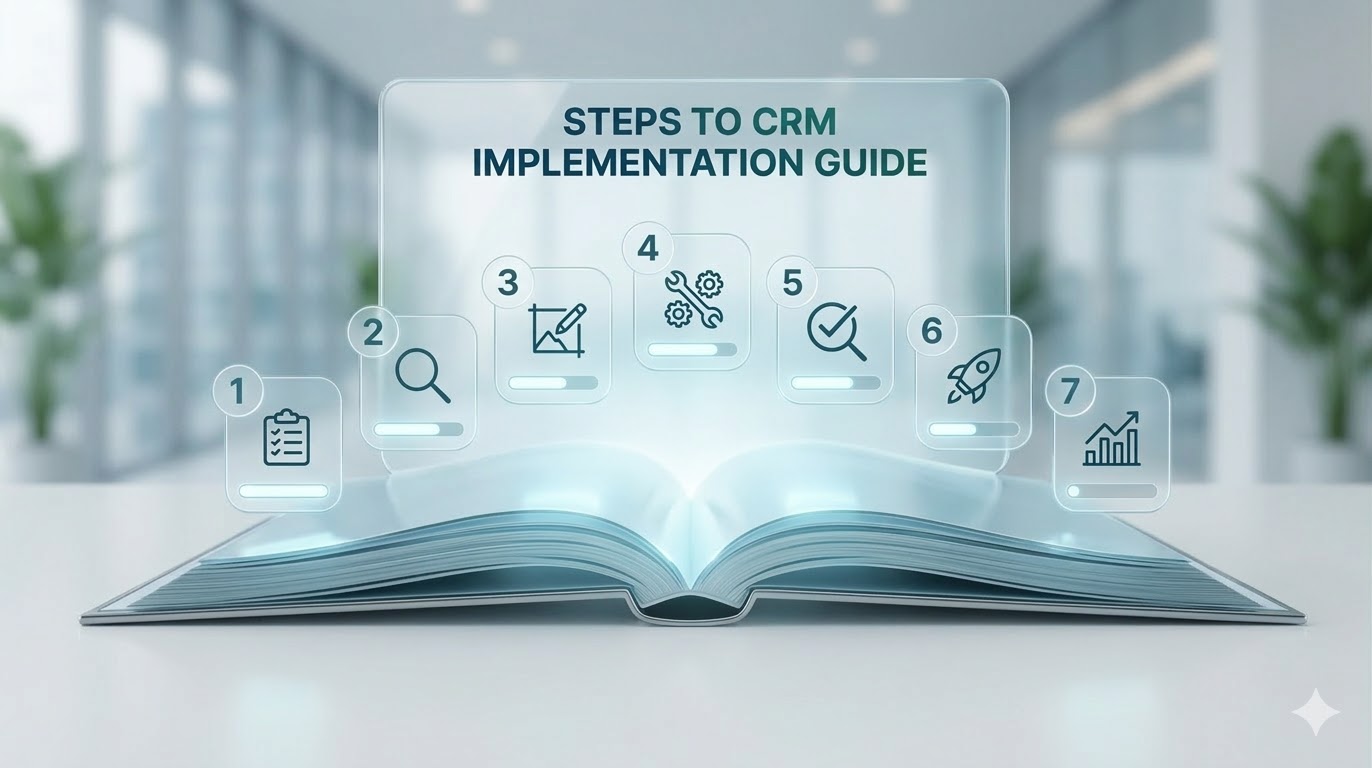
What is a CRM implementation plan? A CRM implementation plan is a documented roadmap that outlines every phase of deployment: from the initial project kickoff to post-launch training and ongoing optimization. It ensures User Adoption, strategic Data Migration, and measurable ROI for business growth in 2025.
Implementing a new Customer Relationship Management (CRM) system is a pivotal step for scaling enterprises. A thoughtful strategy ensures your organization adopts the platform efficiently: minimizing downtime and maximizing time-to-value. Whether you're migrating from legacy systems or launching for the first time, a Change Management framework reduces risk and speeds up impact.
Why a Structured CRM Strategy Matters
A structured plan ensures alignment across core departments such as marketing, sales, support, and IT. By offering clarity on individual responsibilities, timelines, and deliverables, businesses can navigate the technical hurdles of Digital Transformation. Key benefits include improved cross-functional coordination, higher adoption rates, and success metrics that align with broader Revenue Operations (RevOps) goals.
Core Building Blocks of CRM Deployment
A successful implementation is composed of several critical technical and cultural pillars. This often serves as the foundation for broader agentic orchestration across the enterprise.
- Executive Sponsorship: Secure leadership buy-in to drive cultural change.
- Requirements & Process Mapping: Identify how your teams operate. Interviews uncover hidden inefficiencies or opportunities for secure CRM integration.
- Data Governance & Preparation: Cleanse your records thoroughly to avoid "Garbage In, Garbage Out." Plan your Data Migration meticulously using staging environments.
- System Configuration & Tech Stack Alignment: Customize dashboards and ensure compatibility with your Salesforce and SAP integration or accounting tools.
- Training & Internal Champions: Appoint "Power Users" to support their peers post-launch.
Step-by-Step CRM Implementation Roadmap
1. Kickoff & Strategic Alignment
Align stakeholders around shared business goals. Create a project charter to formalize timelines. A steering committee should guide decisions regarding Change Management and risk mitigation.
2. Business Process Mapping
Translate departmental pain points into functional requirements. Consider using collaborative tools to ensure the workflows you design are intuitive for the end-user.
3. Technical Data Strategy
Clean duplicates and standardize field formats. Use a sandbox environment to test field mapping. Establish data governance policies early to prevent Data Decay.
4. Configuration & API Integration
Customize modules for leads, contacts, and opportunities. Use Webhooks to ensure bidirectional data flow between your CRM and other critical business systems.
5. User Acceptance Testing (UAT)
Deploy to a small "Pilot" group to identify usability issues. Refine workflows based on real-world feedback to mitigate broader rollout risks.
| Deployment Factor | Cloud (SaaS) CRM | On-Premise CRM |
|---|---|---|
| Implementation Speed | Fast (Days/Weeks) | Slow (Months) |
| Initial Cost | Low (Subscription-based) | High (Hardware & Licensing) |
| Integration Ease | High (via API) | Moderate (Custom Middleware) |
Expert Insight: Removing Friction via Automation
From the Engini Implementation Team: Many CRM projects fail because the system is too hard to use. One of the biggest mistakes is requiring sales reps to manually enter every data point. By automating 70% of manual data entry via specialized AI Workers, you remove the "friction of use" and ensure your database stays clean automatically, allowing your team to focus on closing deals.
Conclusion: Take Control of Your CRM Rollout
A successful CRM implementation is the bridge between fragmented data and a high-performance revenue engine. By aligning stakeholders early, cleaning data correctly, and delivering role-based training, you maximize your chance for success. Ready to supercharge your rollout? Onboard your first Engini AI Worker today and master your CRM implementation from day one.
Frequently Asked Questions (FAQ)
How long does a CRM implementation plan take for an SMB?
Most small to mid-sized businesses complete planning, pilot, and go-live in 6 to 8 weeks, though full optimization may span a few months depending on the complexity of integrations.
Should we involve all departments in the CRM requirements phase?
Yes. You should involve every department that interacts with customers: sales, marketing, support, finance, and operations: to capture the full end-to-end customer journey.
What are the top CRM adoption metrics to track after launch?
Crucial metrics include data accuracy, user login rates, conversion times, sales cycle length, and customer satisfaction (CSAT) scores.