HR Automation: 2026 Guide to Tools, Examples, and Strategic Rollout
HR automation adoption surged 599% in two years. This 2026 guide covers the best tools, real-world case studies, and a strategic rollout framework for transforming your HR function with AI.
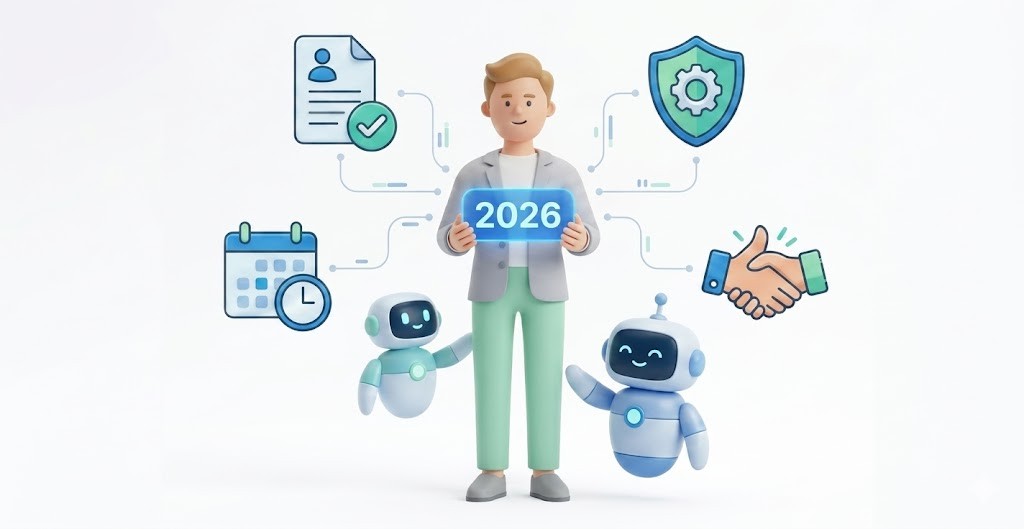
HR automation adoption surged by 599% over the past two years, according to SHRM research. That growth signals a fundamental shift in how organizations manage people operations. This guide covers HR automation examples, the best software tools, real-world case studies, and a strategic rollout framework for 2026. The focus is enabling HR to concentrate on strategic, human-centric initiatives while AI and digital workflows handle administrative volume at scale. Platforms like Engini provide enterprise-grade AI Workers that execute complex, multi-step HR workflows across 1,000+ native integrations.
What Are AI Workers in HR?
AI Workers are autonomous software agents that execute complete HR workflows end-to-end — without human handoff at each step. Unlike traditional HR automation tools that follow fixed if/then rules, or AI copilots that assist humans in completing tasks, AI Workers independently assess context, apply company policy logic, and take action across multiple systems simultaneously. An AI Worker handling onboarding, for example, doesn't just send a welcome email. It provisions system access, routes equipment requests, assigns training schedules, and updates the HRIS record — all triggered by a single status change, with full audit logging throughout. Engini's AI Workers connect to 1,000+ enterprise systems including Workday, SAP, Salesforce, and ServiceNow, making them deployable without custom API development.
Defining HR Automation and Its Evolution
HR automation is the use of software, algorithms, and AI to digitize repetitive administrative tasks across the employee lifecycle. It spans recruiting, onboarding, payroll, leave tracking, and offboarding. The concept originated with basic e-HRM systems in the late 1990s, as noted by research published in Taylor & Francis.
Today, agentic AI agents execute multi-step HR workflows autonomously. They process approvals, route documents, and trigger downstream actions without manual intervention. The shift from simple form digitization to context-aware, decision-ready automation defines the current HR automation examples organizations deploy in 2026.
Putting HR at the Center of Strategy
HR automation generates real-time data that transforms HR from a back-office function into a strategic business partner. When your ATS, LMS, and performance tools feed a unified dashboard, HR leaders identify patterns invisible in manual processes. Automated analytics can show whether employees onboarded through structured digital workflows reach full productivity faster than those processed manually.
AI-driven platforms correlate employee listening data with attrition risk, then surface recommendations directly to leadership. A mid-size SaaS company running automated pulse surveys alongside performance data might discover that remote employees in their first 90 days need two additional check-ins to match in-office retention rates.
Hyperautomation merges multiple technologies into unified HR workflows. Natural language processing powers chatbots that answer policy questions. Machine learning screens candidates against job criteria. Engini's Agentic Workflows orchestrate multi-step processes like benefits enrollment across payroll, insurance, and compliance systems simultaneously, connecting through 1,000+ native integrations.
Key HR Automation Software Solutions and Tools
Selecting the right HR automation software depends on your workforce size, existing tech stack, and priority workflows. The major categories of HR automation tools, organized by specialty:
All-in-one HR suites: BambooHR, Gusto, Namely, Rippling, Workday
Recruitment platforms: Greenhouse, Lever, SmartRecruiters, Workable
Onboarding/offboarding: Aptien, WorkBright
Payroll and benefits: Fuse Workforce Management, TriNet Zenefits
Best All-In-One HR Automation Software
The best HR automation software platforms consolidate payroll, benefits, timekeeping, hiring, and compliance into a single system.
BambooHR unites payroll, benefits, timekeeping, hiring, and onboarding data. It delivers accurate tracking, efficient coordination, and strengthened security controls for small to mid-size organizations.
Gusto automates payroll, timekeeping, onboarding workflows, benefits administration, performance management, and tax compliance. It targets small and medium-sized businesses with a clean interface.
Namely automates employee data, payroll, and timekeeping on its core platform. Enhanced modules add applicant tracking, benefits administration, performance management, and a self-service mobile app.
Rippling integrates HR, IT, and finance automation through a cloud-based directory. It synchronizes data and manages digital access permissions across the employee lifecycle automatically.
Workday provides AI-powered solutions for human capital and finance management. Over 10,000 organizations worldwide use it, including more than 50% of Fortune 500 companies, per Workday's published customer data.
Engini provides AI Workers that execute complex, policy-aware decisions through Agentic Workflows across 1,000+ native integrations. These Workers go beyond traditional HR suite capabilities by applying multi-step logic and error recovery to processes like benefits enrollment, access provisioning, and compliance routing.
Top HR Automation Tools for Recruitment
Recruitment automation tools eliminate the manual bottlenecks that cost organizations top talent.
Greenhouse covers every hiring stage from sourcing to onboarding. It provides AI-driven insights, simplified interview scheduling, and structured recruitment workflows.
Lever merges applicant tracking with candidate relationship management. It offers automated personalized outreach, a self-service candidate portal, and anti-bias hiring features.
SmartRecruiters handles sourcing, interviews, offers, and onboarding. Its AI powers candidate interactions via text, voice, and video with multi-level screening.
Workable posts jobs instantly to top boards and social platforms. It includes a career page builder and AI-identified passive candidate database with customized outreach emails.
Onboarding & Exit Process Automation Solutions
Aptien configures onboarding with document management, electronic forms, benefits selection, and equipment checkout. Its offboarding solution handles information transfer, password suspension, and equipment return for full legal compliance.
WorkBright provides fully remote, mobile-friendly onboarding. It manages new hire paperwork from anywhere with automatic reminders that drive successful candidate conversion.
Engini's AI Workers auto-provision application access, route device requests, and trigger compliance checklists the moment an employee status changes in the HRIS. These Workers connect natively with existing enterprise systems, removing the need for custom API development.
Core Benefits of HR Automation
Organizations deploying HR automation across industries report measurable gains in efficiency, compliance, decision-making, and employee experience.
Time savings. One survey found that automating administrative tasks saved HR staff over seven hours per week, according to SHRM. Automating payroll calculations, leave approvals, and onboarding checklists compresses multi-day processes into minutes.
Error reduction. Automated systems perform calculations with consistent accuracy. They apply current tax tables, enforce policy rules, and flag anomalies before they reach employees — protecting organizations during compliance audits.
Greater collaboration. Automated workflows make task ownership and approval chains visible to every stakeholder. When a job requisition needs sign-off or a performance review stalls, the system surfaces the bottleneck immediately.
Streamlined record-keeping. Digital HR systems replace printed documents and physical filing cabinets. Every form, signature, and approval lives in an audit-ready digital archive that simplifies compliance reviews.
HR Pro Tip: Optimize before automating. If your leave policy contains contradictory rules or your onboarding checklist skips compliance steps, automation will only accelerate those flawed outcomes. Audit and fix your workflows before connecting them to any automated system.
Barriers to HR Automation Adoption
Integration complexities. New payroll software might not sync with your time-tracking platform. A benefits enrollment tool might duplicate records if it cannot read your HRIS data natively. One mid-market healthcare company spent three months reconciling duplicate employee records after deploying a new benefits platform that could not communicate with its legacy HRIS. Organizations that select platforms with pre-built connectors reduce integration timelines by weeks.
Maintaining compliance. Automation systems must update tax tables, leave entitlements, and reporting requirements continuously. Organizations operating across multiple states need platforms that automatically apply jurisdiction-specific rules without manual configuration for each location.
Data security. HR systems process the most sensitive employee data in any organization: salary information, health records, and performance evaluations. Any automation platform must comply with applicable data protection regulations — including GDPR and HIPAA — before deployment.
10 HR Automation Examples with Real-World Impact
Any routine, repetitive, or data-driven HR process can be automated. Below are 10 HR automation examples paired with case studies showing measurable outcomes.
1. Recruiting Automation. AI screens candidates against EEO criteria, ranks matches, and schedules interviews — reducing the administrative burden on HR teams. Case study: Mastercard implemented a talent experience platform linking its career site to its CRM and rolled out AI-powered interview scheduling. Job seekers interacted longer with the career site and applied more frequently. Mastercard gained significantly more candidate profiles and achieved substantially faster interview scheduling.
2. Employee Onboarding. HR automation provides structured onboarding checklists with auto-generated notifications, approvals, and e-signed form collection. Systems grant application access based on predefined role criteria on day one. Case study: KPMG implemented an integrated onboarding solution that triggers automatically when the contract is signed. After two years, KPMG employees rated their hiring and first-week experience above 4 out of 5. The automated preboarding sequence eliminated the gap between offer acceptance and start date.
3. Offboarding. Automated offboarding systems cancel application access on a set date, generate equipment return requests, schedule exit interviews, and create complete audit trails. A multinational company can enforce GDPR-compliant data removal across all systems within hours of an employee's last day.
4. Leave Management. Employees submit and track requests through self-service portals. The system checks balances, routes approval to the correct manager, and syncs approved leave directly with payroll — enforcing jurisdiction-specific rules without manual oversight.
5. Expense Claims. Employees upload a receipt photo from a mobile device, and software automatically extracts amount, merchant, tax category, and date. The manager receives an instant approval notification. Organizations report significant reductions in processing time and elimination of data entry errors.
6. Payroll Processing. Case study: Moncrief Construction replaced paper timesheets mailed to the main office with digital hour entry via desktop or mobile. The result: faster processing, higher accuracy, lower costs, and comprehensive reporting on overtime and labor cost allocation.
7. Tax Filing. HR tax software handles calculations and filings based on relevant federal, state, and local regulations. It verifies that employees and contractors receive the required information and generates a digital audit file automatically.
8. Timekeeping. Timekeeping software captures work hours in real time through digital check-ins and syncs automatically with payroll. Managers can identify overtime patterns and address scheduling issues before they affect productivity.
9. Benefits Enrollment. Case study: Canyon Ranch adopted a benefits management platform providing on-demand access, resource materials, and online enrollment. The platform automatically updates each vendor's database when the employer makes changes. Canyon Ranch achieved substantial annual savings in administrative hours and labor costs after implementation.
10. Performance Management. Case study: Mazars replaced paper review cycles with automated reminders and instantaneous performance data reports. The self-service portal gave employees direct access to their own performance history, increasing transparency and engagement with the review process.
When to Implement HR Automation
The decision to implement HR automation depends on operational signals, not just budget availability.
HR is underperforming on core functions. If hiring timelines stretch beyond benchmarks, payroll errors recur monthly, or onboarding paperwork delays first-day productivity, manual processes have reached their capacity limit.
The organization is growing faster than HR can scale. A 200-person company adding 50 employees per quarter cannot process that volume manually without quality erosion. One fast-growing SaaS firm cut onboarding completion time from 12 days to 3 after automating document collection and access provisioning.
Budgets are constrained but workload keeps rising. Offloading data entry, ticket routing, and approval workflows to automated systems preserves budget while maintaining service levels.
Compliance risk is escalating. If mandated recordkeeping falls behind or multi-state regulatory requirements overwhelm manual tracking, automation provides the reliability human processes cannot sustain at scale. A single missed compliance deadline can cost more than an entire year of automation software licensing.
Employee satisfaction scores are declining. When self-service requests like PTO approvals or pay stub access take days instead of minutes, employee frustration compounds. Automation delivers instant resolution for routine queries, freeing HR to address complex issues requiring genuine human judgment.
Conclusion
HR automation in 2026 is not a one-time implementation project. It is an ongoing capability that evolves alongside your workforce, your technology stack, and the regulatory environment. The organizations gaining the most value treat automation as a continuous improvement cycle: pilot a workflow, measure results, expand scope, and refine. With 42% of HR professionals planning to expand automation within five years, according to SHRM, the competitive gap between early adopters and holdouts will widen.
Start with the HR automation examples and best practices outlined in this guide. Identify your highest-volume manual workflow, select a platform that fits your integration requirements, and run a focused pilot. Book a Demo to explore how Engini's AI Workers can accelerate your HR transformation today.
FAQs
How can HR automation improve employee satisfaction?
HR automation resolves routine requests in seconds instead of days. When employees submit a PTO request, check a benefits balance, or access a pay stub through a self-service portal, they get instant answers. The freed-up HR capacity redirects toward meaningful employee programs — career development conversations, culture initiatives, and personalized support.
What are the key challenges in implementing HR automation?
The primary challenge is connecting new automation tools with legacy systems that store data in incompatible formats. The second challenge is organizational resistance. Overcoming both requires clear communication of early wins, hands-on training, and starting with a single high-impact workflow like onboarding or leave management.
What role does AI play in the future of HR?
AI and machine learning automate rules-based HR workflows at scale — screening applicants, scheduling interviews, processing payroll, and answering routine questions through natural language interfaces. This frees HR professionals to focus on challenges requiring human judgment: talent strategy, conflict resolution, and retention planning.
How can organizations balance automation with maintaining a human touch?
Automate what is repetitive and protect what is relational. An AI system filters 500 resumes; a human conducts the interview that assesses cultural fit. Automated onboarding delivers documents and provisions access; a manager's welcome call on day one builds belonging.
What are the 4 pillars of automation?
The four pillars are resilient (error recovery without manual intervention), intuitive (minimal training required), secure (encryption, access controls, and audit trails by default), and end-to-end (complete workflows from trigger to resolution, not isolated tasks).