April 8, 2026
The Self-Auditing Finance Department: How Automated Financial Compliance Creates Continuous Audit Readiness
Finance teams today are expected to move faster, reduce risk exposure, and maintain stronger compliance controls across increasingly complex system environments. Traditional audit preparation workflows—spreadsheet tracking, email approvals, and fragmented documentation—cannot scale with modern finance operations.
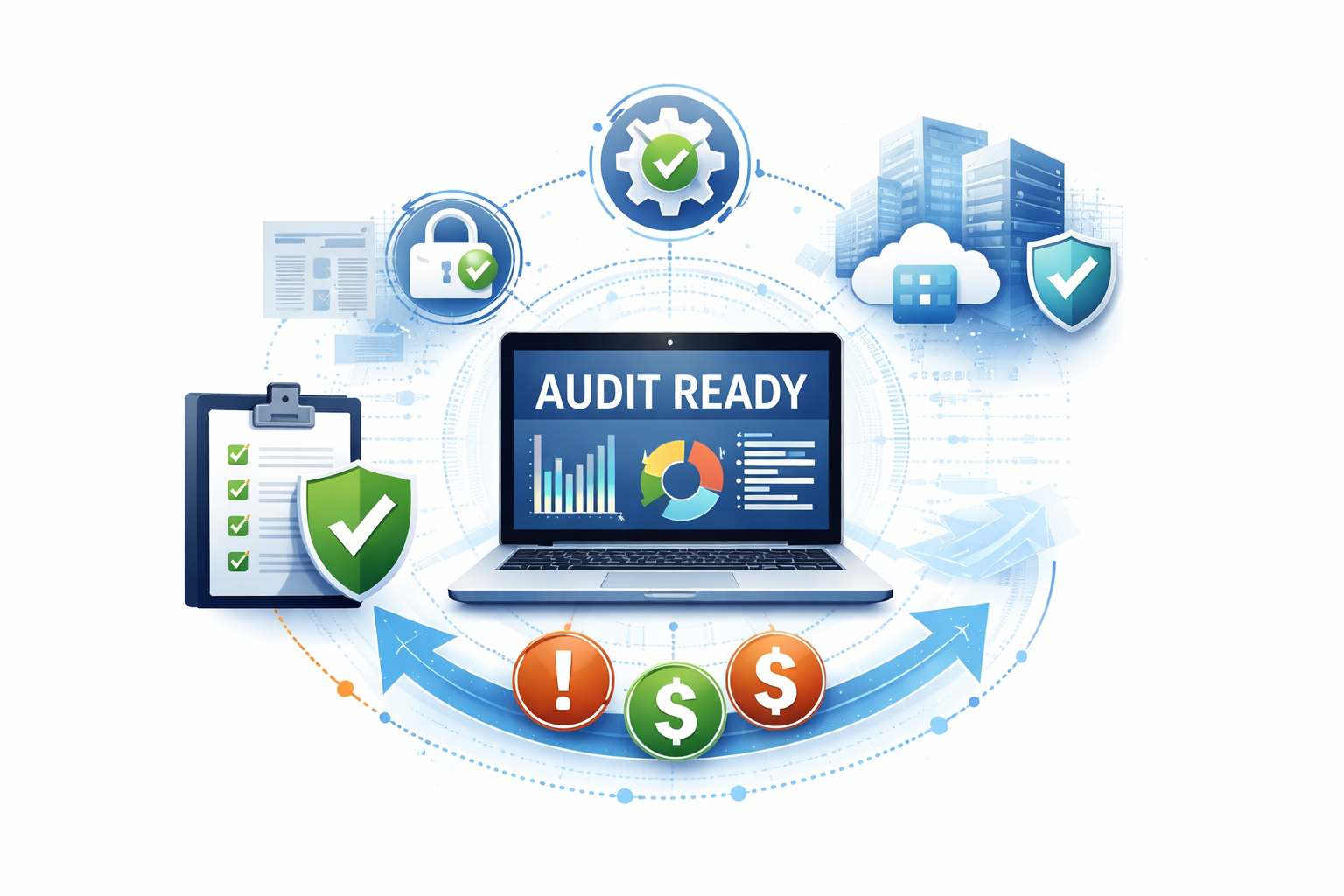
Many organizations implement these controls as part of a broader automation roadmap like those described in Engini’s Finance Automation solutions architecture for NetSuite and Salesforce environments.
- segregation-of-duties enforcement across approval layers
- policy-driven workflow authorization routing
- automated audit-trail generation during transactions
- continuous reconciliation monitoring
- exception detection alerts and escalation triggers
- cross-system documentation capture automation
What Is a Self-Auditing Finance Department?
A self-auditing finance department embeds compliance enforcement directly inside operational workflows so audit evidence is generated automatically as transactions move between ERP, CRM, billing, and reporting systems. Controls become infrastructure-level safeguards instead of manual checklist activities performed before external audits.
Increasingly, organizations combine workflow orchestration with context-aware AI decision infrastructure that surfaces compliance risks earlier in the transaction lifecycle and improves exception visibility across finance operations.
- approval workflows automatically enforce internal policy logic
- audit documentation is captured continuously during workflows
- exceptions surface immediately instead of during month-end review cycles
- controls become system-enforced rather than person-dependent
- reconciliation status remains visible throughout reporting periods
Why Traditional Compliance Workflows Break at Scale
Manual compliance workflows depend heavily on spreadsheet coordination, email-based approvals, and fragmented documentation storage across systems. As transaction volumes increase and reporting cycles accelerate, these approaches create audit-readiness bottlenecks that increase exception risk and slow financial close processes.
| Compliance Area | Manual Finance Department | Self-Auditing Finance Department |
|---|---|---|
| Approval tracking | Email-based routing | Policy-driven workflow automation |
| Audit trail generation | Collected before audits | Captured automatically during workflows |
| Segregation of duties | Manually enforced | Continuously system-enforced |
| Reconciliation monitoring | Month-end review cycles | Continuous exception detection |
| Documentation completeness | Fragmented across systems | Automatically centralized |
Technology Stack Behind a Self-Auditing Finance Department
Modern compliance automation environments operate across integrated ERP, CRM, and workflow orchestration layers that synchronize approval logic, documentation capture, reconciliation status visibility, and exception monitoring dashboards across financial infrastructure.
This integration-driven architecture mirrors the workflow coordination models used in multi-currency reconciliation automation environments where data consistency and approval traceability must remain synchronized across systems.
| System Layer | Example Platforms | Compliance Role |
|---|---|---|
| ERP | NetSuite | Financial transaction authority layer |
| CRM | Salesforce | Contract-to-revenue alignment visibility |
| Workflow orchestration | Integration middleware | Approval routing enforcement logic |
| Document capture | AP automation platforms | Audit evidence generation automation |
| Monitoring layer | Compliance dashboards | Exception detection and visibility |
Signs Your Finance Department Is Ready For Compliance Automation
Organizations typically begin adopting automated compliance workflows when manual documentation coordination and reconciliation tracking begin limiting reporting speed or increasing audit preparation risk exposure.
- audit preparation requires manual document assembly
- approval tracking depends on spreadsheet coordination
- documentation exists across disconnected systems
- manual reconciliation tracking cycles slow reporting timelines
- internal controls rely on individual staff ownership
- leadership lacks real-time compliance visibility
Implementation Roadmap For Automated Financial Compliance
Finance teams typically implement continuous compliance environments through staged workflow automation deployments that progressively strengthen internal control reliability while improving reporting visibility.
| Stage | Capability | Business Impact |
|---|---|---|
| Stage 1 | Approval workflow automation | Improved authorization consistency |
| Stage 2 | Documentation capture automation | Reduced audit preparation effort |
| Stage 3 | Policy enforcement logic | Stronger internal control reliability |
| Stage 4 | Exception monitoring dashboards | Earlier compliance risk detection |
| Stage 5 | Continuous audit readiness | Self-auditing finance operations |
How Finance Leaders Are Moving Toward Continuous Compliance
Finance leaders are shifting from periodic audit preparation cycles toward continuous assurance environments supported by workflow orchestration platforms, AI-assisted exception monitoring, and ERP-CRM integration infrastructure that maintains documentation completeness automatically.
These automation strategies strengthen governance visibility, shorten reporting timelines, reduce reconciliation friction, and improve confidence in financial reporting accuracy across enterprise finance systems.
Frequently Asked Questions About Automated Financial Compliance
What is automated financial compliance?
Automated financial compliance uses workflow orchestration and integrations to enforce accounting policies continuously across ERP and finance operations instead of relying on manual audit preparation cycles.
What makes a finance department self-auditing?
A self-auditing finance department captures compliance documentation automatically during workflows so audit evidence is generated continuously rather than assembled before reporting deadlines.
Does automation replace internal audits?
No. Automation strengthens internal audits by improving documentation completeness, approval traceability, and control enforcement consistency across financial systems.
Can automated compliance work across NetSuite and Salesforce environments?
Yes. Integration-layer workflow orchestration enables organizations to enforce compliance controls across ERP and CRM systems simultaneously while maintaining synchronized audit trails.
Co-founder & CEO at Engini.io
With 11 years in SaaS, I've built MillionVerifier and SAAS First. Passionate about SaaS, data, and AI. Let's connect if you share the same drive for success!