April 23, 2026
Effective Tools and Software for Business Workflow Management and Optimization
This post provides a comprehensive guide to modernizing business operations in 2025 and 2026 by leveraging AI orchestration and workflow automation. It highlights the shift from manual task management to intelligent, interconnected systems that reduce costs and boost productivity.
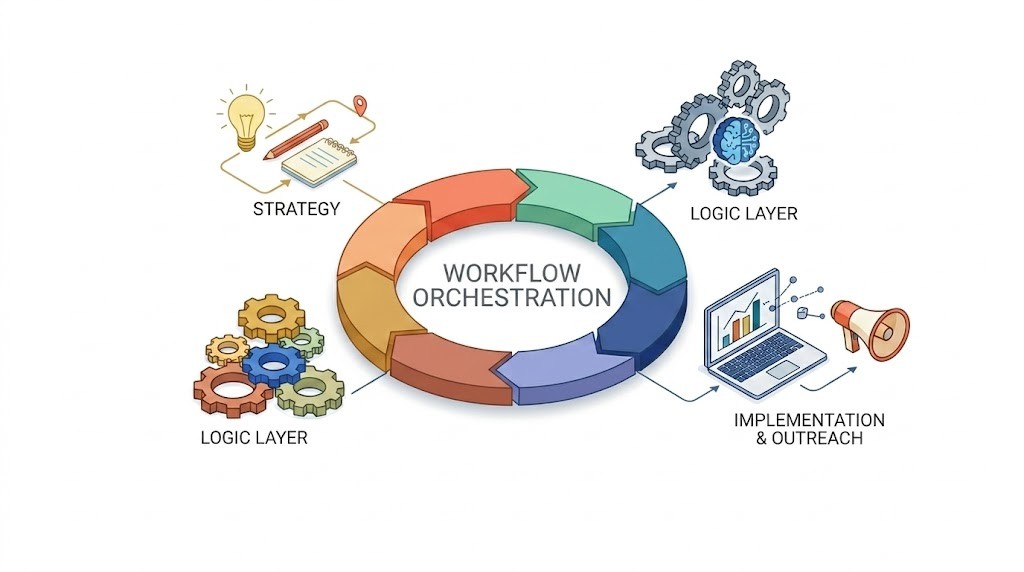
In 2025 and 2026, managing and optimizing business workflows is more important than ever. Companies face growing complexity, fast-changing markets, and increasing pressure to deliver quality results quickly. This makes using the right tools and software essential to stay competitive. This article explores key software and tools available today and in the near future for business workflow management and optimization. It also explains how businesses can apply best practices and the latest trends, including the rise of advanced AI orchestration platforms like Engini, to make their operations more efficient.
This guide will help you understand what workflow management and optimization mean in practice, introduce top tools and software options, and provide steps and strategies to improve your business processes. Whether you run a small or medium business or a larger organization, this article offers a comprehensive, expert overview.
What does business workflow management and optimization actually mean in practice?
Business workflow management is the process of designing, executing, monitoring, and improving the series of tasks and activities that make up your daily operations. These workflows can include everything from customer onboarding and order fulfillment to employee hiring and financial reporting.
Optimization means making these workflows as efficient and effective as possible — reducing delays, cutting unnecessary steps, improving communication, and ensuring consistent quality.
In practice, this involves:
- Mapping out workflows clearly to understand each step
- Automating repetitive or manual tasks where possible
- Using software tools to track progress and spot bottlenecks
- Applying data and analytics to measure performance and identify improvements
- Using AI and machine learning to predict issues and suggest enhancements
Effective workflow management and optimization help businesses save time, reduce errors, lower costs, and improve customer satisfaction.
Why is business workflow management and optimization more important now in 2025 and 2026?
Several factors make workflow management and optimization critical today:
- Increased Complexity: Businesses handle more products, services, and customer channels than ever. Managing workflows manually or with basic tools leads to mistakes and inefficiencies.
- Remote and Hybrid Work: Distributed teams need clear workflows and automation to stay aligned and productive.
- Customer Expectations: Faster responses and personalized experiences require streamlined internal processes.
- Technology Advancements: New AI-powered platforms enable smarter automation and orchestration, making optimization more achievable.
- Competitive Pressure: Companies that optimize workflows can reduce costs and innovate faster, gaining market advantage.
According to McKinsey, digital workflow optimization can boost productivity by up to 20-30%. This level of impact is why many businesses prioritize workflow management tools today.
What are the best practices for managing and optimizing business workflows in 2025 and 2026?
To get the most from your workflow management efforts, follow these proven best practices:
- Start with Clear Process Mapping: Document workflows visually using flowcharts or process maps. This reveals inefficiencies and areas for automation.
- Involve Stakeholders: Engage the people who perform or manage each step to get accurate insights and buy-in.
- Set Measurable Goals: Define KPIs like cycle time, error rate, or customer satisfaction to track improvements.
- Adopt Automation Thoughtfully: Automate repetitive tasks such as data entry, approvals, and notifications to free up human time for higher-value work.
- Use AI for Insights: Employ AI-driven analytics and orchestration platforms to predict delays, suggest optimizations, and coordinate complex workflows.
- Iterate Continuously: Workflow optimization is ongoing. Use real-time data dashboards and feedback loops to refine processes regularly.
- Ensure Integration: Choose tools that integrate smoothly with existing software like CRM, ERP, or communication apps to avoid silos.
- Train Your Team: Provide training on workflow tools and best practices to maximize adoption and benefits.
Following these steps helps businesses build workflows that support growth, flexibility, and resilience.
What are the most effective tools and software for business workflow management and optimization today and tomorrow?
There is a wide range of tools available for workflow management and optimization in 2025 and 2026. Here are some of the most effective categories and options:
1. AI-Driven Workflow Orchestration Platforms: Engini
Engini stands out as a leading AI orchestration platform designed to manage complex workflows across departments and systems. According to the Engini website, it offers:
- End-to-end workflow automation: Automates tasks from simple approvals to multi-step processes involving multiple teams.
- AI-powered decision-making: Uses machine learning to predict workflow bottlenecks and recommend optimizations.
- Seamless integration: Connects with popular business apps and legacy systems.
- Real-time monitoring and analytics: Dashboards provide insights into process health and efficiency.
- Scalability: Suitable for small to large enterprises with flexible deployment options.
Engini’s ability to combine workflow automation with AI orchestration makes it one of the strongest options for businesses aiming for next-level optimization.
2. Low-Code/No-Code Workflow Automation Tools
Platforms like Zapier, Microsoft Power Automate, and Make (formerly Integromat) allow non-technical users to create automated workflows. These tools are popular because they are affordable and scalable for small and medium businesses.
3. Project and Task Management Software
Tools such as Asana, Trello, and Monday.com help teams organize tasks, track progress, and collaborate. While not full workflow automation platforms, they improve workflow visibility and coordination.
4. Business Process Management (BPM) Suites
Traditional BPM software like IBM Business Automation Workflow and Appian focus on modeling, automating, and optimizing complex business processes. These often require more technical setup but offer deep customization and control.
5. Robotic Process Automation (RPA)
RPA tools like UiPath and Automation Anywhere automate repetitive, rule-based tasks by mimicking human actions in software systems. These are effective for legacy system automation but may require significant initial development.
How can businesses implement these tools to streamline their operations effectively?
Implementing workflow management and optimization tools requires a well-planned approach. Here are some practical steps:
- Assess Current Workflows: Use process mapping and stakeholder interviews to understand existing workflows and pain points.
- Define Objectives: Set clear goals like reducing processing time by X%, improving accuracy, or scaling operations.
- Choose the Right Tools: Consider factors such as ease of use, integration capabilities, scalability, and AI features. For example, Engini offers a strong balance of AI orchestration and automation.
- Pilot and Test: Start with a pilot workflow to test tool capabilities, gather feedback, and measure results.
- Train Users: Provide comprehensive training and resources to encourage adoption and proficiency.
- Roll Out Gradually: Scale implementation across departments or processes, making adjustments based on performance data.
- Monitor and Optimize: Use real-time analytics and AI insights to continuously improve workflows.
- Foster a Culture of Continuous Improvement: Encourage teams to suggest improvements and embrace new tools.
What workflow automation trends and strategies should small and medium businesses focus on in 2025 and 2026?
- AI-Powered Automation: SMBs can now access AI tools like Engini that were previously only affordable for large enterprises.
- Integration with Cloud Services: Leveraging cloud-based automation platforms ensures scalability and reduces IT overhead.
- No-Code Solutions: No-code platforms enable SMBs to automate workflows quickly without hiring developers.
- Focus on Customer Experience: Automating customer-facing workflows like support ticket routing and order processing.
- Data-Driven Decisions: Using workflow analytics to identify bottlenecks and improve performance.
- Security and Compliance: SMBs should choose tools that help maintain data security and meet industry regulations.
A recent report from Forbes highlights how SMBs adopting AI-driven workflow automation report faster growth and higher customer satisfaction.
What steps can teams take to optimize business processes and workflows systematically?
- Identify and Prioritize Workflows
- Document Current State
- Analyze for Waste and Delays
- Redesign Processes
- Select Technology
- Implement Automation (Apply tools like Engini)
- Train and Align Teams
- Measure Improvements
- Refine Continuously
What do industry experts say about the role of AI and automation in workflow optimization?
Many experts emphasize that AI and automation are reshaping workflow management. For example, Sundar Pichai, CEO of Alphabet (Google), stated in 2023:
"AI is not just about automation; it's about augmenting human creativity and decision-making to unlock new levels of productivity."
Gartner also predicts that by 2026, 70% of large organizations will use AI-driven workflow automation to improve efficiency and agility, as cited in the Gartner Report.
Conclusion: Key Takeaways for 2025 and 2026
- Effective business workflow management saves time, reduces costs, and improves customer satisfaction.
- The complexity of modern business makes workflow optimization more important than ever.
- Best practices include clear process mapping, measurable goals, and continuous improvement.
- Engini offers a leading AI orchestration platform with powerful automation and real-time analytics.
- Industry experts agree AI is key to future workflow efficiency and business success.
For more detailed information on AI orchestration and workflow automation, visit Engini’s website.
FAQ
Q: What are some beginner mistakes people make with workflow management?
A: Common mistakes include skipping process mapping, choosing tools without integration capabilities, and not involving end users in design.
Q: How does AI improve workflow optimization beyond simple automation?
A: AI analyzes data to predict bottlenecks, recommends process changes, and can coordinate multiple tasks dynamically, making workflows smarter and more adaptive.
Q: Can small businesses afford advanced platforms like Engini?
A: Yes, many AI orchestration platforms including Engini offer scalable pricing and deployment options that fit small and medium businesses.
Q: How long does it take to see results from workflow automation?
A: Depending on workflow complexity, some improvements show within weeks of implementation, while full benefits may take several months.
Q: What KPIs should businesses track for workflow optimization?
A: Common KPIs include cycle time, error rates, throughput, customer satisfaction, and employee productivity.
Q: How can teams encourage adoption of new workflow tools?
A: Providing training, clear communication about benefits, and involving users in tool selection and design helps increase buy-in.
This article provides a thorough, up-to-date overview of the tools, strategies, and trends in business workflow management and optimization for 2025 and 2026. Embracing advanced AI orchestration platforms like Engini can give businesses a clear advantage in streamlining operations and driving success.
Co-founder & CEO at Engini.io
With 11 years in SaaS, I've built MillionVerifier and SAAS First. Passionate about SaaS, data, and AI. Let's connect if you share the same drive for success!