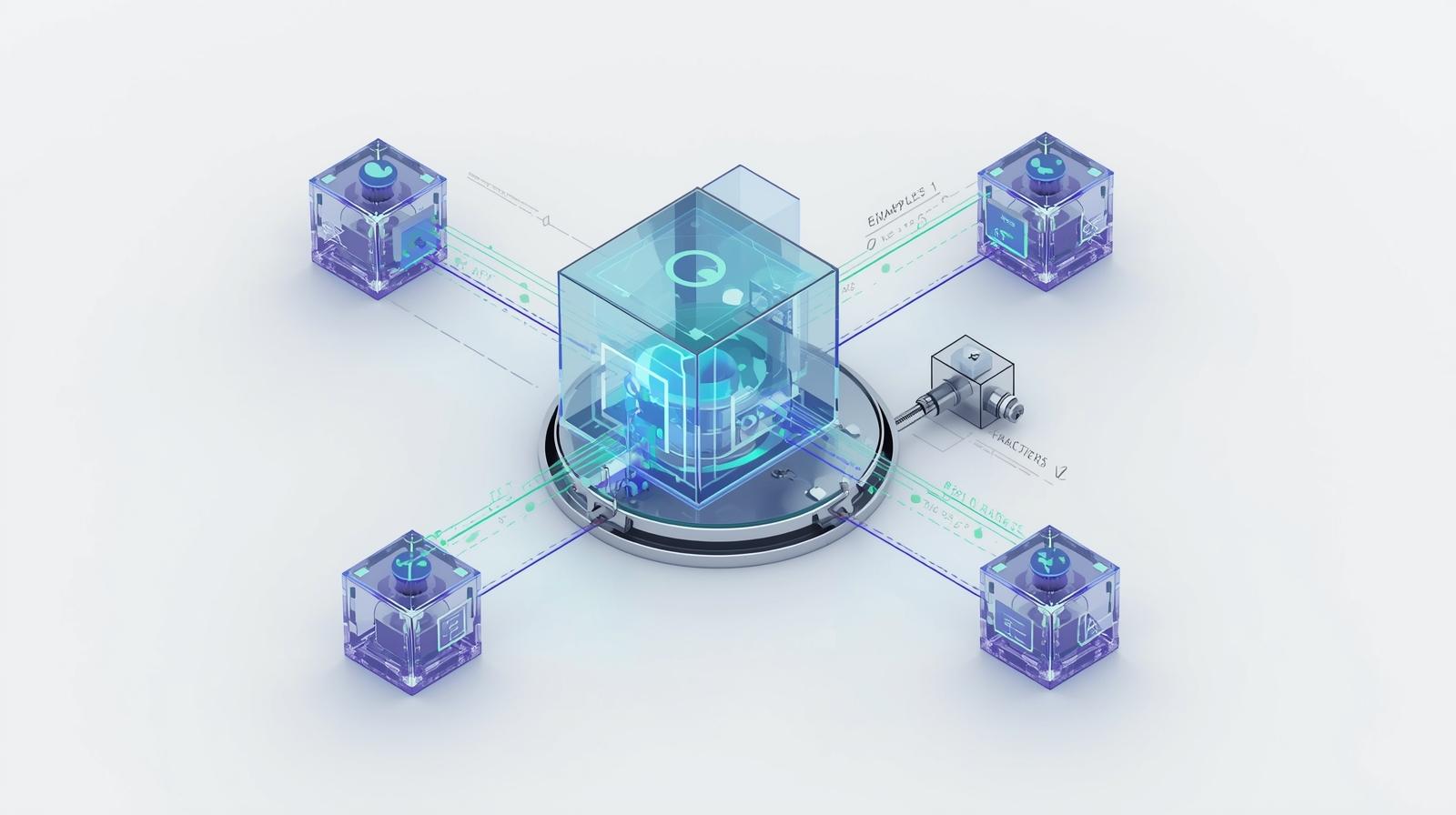
What is integration testing? Integration testing is a software testing phase where individual units or components are combined and tested as a group. Its primary goal is to expose faults in the interaction between integrated units, specifically verifying that API Endpoints, database connections, and third-party services work together seamlessly within a Continuous Integration pipeline in 2025.
In the modern era of microservices and cloud-native architectures, unit testing alone is insufficient. While a single module may pass isolated tests, real-world errors usually occur at the interface: where data is handed off between services. This guide provides a deep technical roadmap to mastering this critical phase of the SDLC.
The Core Philosophies: Incremental vs. Non-Incremental
Before selecting a methodology, teams must decide how they will approach the integration of their codebases:
- Non-Incremental Testing (Big Bang): This approach joins all modules at once after individual development is complete. While it seems efficient for tiny projects, it makes isolating the source of a bug nearly impossible in complex systems.
- Incremental Testing: This philosophy joins two or more logically related modules. More modules are then added one by one, allowing developers to pinpoint exactly which connection caused a failure. This method utilizes Stubs and Drivers to simulate missing components.
The 4 Primary Types of Integration Testing
Choosing the right approach depends on your architecture's complexity and your team's deployment speed.
| Testing Type | Methodology & Technical Detail | Pros/Cons |
|---|---|---|
| Big Bang | Non-incremental. All units are integrated and tested as a single block once complete. | Pro: Fast for small apps. Con: High risk of missing interface flaws. |
| Top-Down | Incremental. Starts with high-level modules. Uses Stubs to simulate lower-level units. | Pro: Major logic flaws found early. Con: Stubs are complex to maintain. |
| Bottom-Up | Incremental. Starts with foundational units. Uses Drivers to simulate higher modules. | Pro: Great for data-heavy foundational testing. Con: Critical logic found late. |
| Sandwich | A hybrid strategy where Top-Down and Bottom-Up meet in a middle layer. | Pro: Maximum coverage. Con: Requires significant resources and planning. |
Technical Implementation: A 5-Step Roadmap
A successful testing phase follows a logical progression to ensure all API Endpoints are validated before production.
- Prepare the Test Plan: Outline the scope and identify the critical interfaces. Define the hardware, software, and mock requirements for your environment.
- Design Test Cases and Scripts: Create detailed scenarios for positive, negative, and edge-case inputs. Focus specifically on how data is transformed as it crosses system boundaries.
- Configure the Test Environment: Mirror your production environment as closely as possible. Set up mocks for external API Endpoints to avoid third-party downtime affecting your internal tests.
- Execute and Monitor: Run the integration scripts and watch the data flow. Pay close attention to latency, timeout errors, and data corruption issues.
- Defect Management & Regression: Log failures and work with dev teams to resolve communication gaps. Re-test once fixed to ensure patches haven't introduced Regression Testing needs.
Real-World Example: E-Commerce Order Flow
Imagine testing an "Order Placement" feature. You aren't just testing a button; you are validating the integration of four distinct services using APIs or Webhooks:
- Inventory Service: Checks if the product is in stock.
- Payment Gateway: An external API Endpoint that validates credit card data.
- Shipping Service: Calculates delivery times and costs.
- Notification Service: Sends an automated email to the customer.
The integration test ensures that when the payment is successful, the inventory is deducted, and the notification is triggered in the correct sequence with accurate data.
Expert Insight: "Shifting Left" & Automation
From the Engini Engineering Team: In our 2025 engineering audits, we found that teams practicing "Shift Left" testing: integrating tests early in the development lifecycle: reduce their total deployment failures by 40%. By automating your suite within a Continuous Integration (CI) pipeline (and pairing it with robust Runbook Automation), you ensure every code commit is validated against real API Endpoints instantly.
Industry Standard Tools for 2025
Manual integration testing is a bottleneck. Modern teams leverage these tools to maintain velocity:
- Postman: Essential for testing API Endpoints and validating JSON/XML payloads.
- Selenium / Cypress: Best for Top-Down testing involving UI-to-Backend connectivity.
- WireMock: Used to create mocks of third-party APIs so your internal build doesn't break during external outages.
- Pytest / JUnit: Foundational frameworks for writing automated scripts that run within your CI pipeline.
Conclusion
Integration testing is the glue that holds modern software together. By prioritizing the validation of API Endpoints and embedding your tests within a Continuous Integration flow, you build a system that is resilient to change.
The organizations that scale in 2025 treat testing not as a final hurdle, but as a core component of their development culture. Ready to automate your integration workflows? Onboard your first Engini AI Worker today and master your agentic workflows.
Frequently Asked Questions (FAQ)
1. What is a Stub vs. a Driver?
A Stub is a dummy module that replaces a lower-level component (used in Top-Down). A Driver is a dummy module that replaces a higher-level component (used in Bottom-Up).
2. How does integration testing prevent Regression?
By automating your suite, you perform Regression Testing every time code changes. This ensures that new features haven't broken existing system connections.
3. When should I use Big Bang testing?
Only use Big Bang for very small systems where all modules are already completed and the number of integration points is extremely limited.