April 10, 2026
Why IT Teams Stay Reactive (And How a Governed AI Operations Layer Fixes It)
Most IT teams stay reactive because their systems don’t operate together. Learn how a governed AI operations layer reduces duplicate incidents, surfaces knowledge instantly, and turns IT into a proactive execution function.
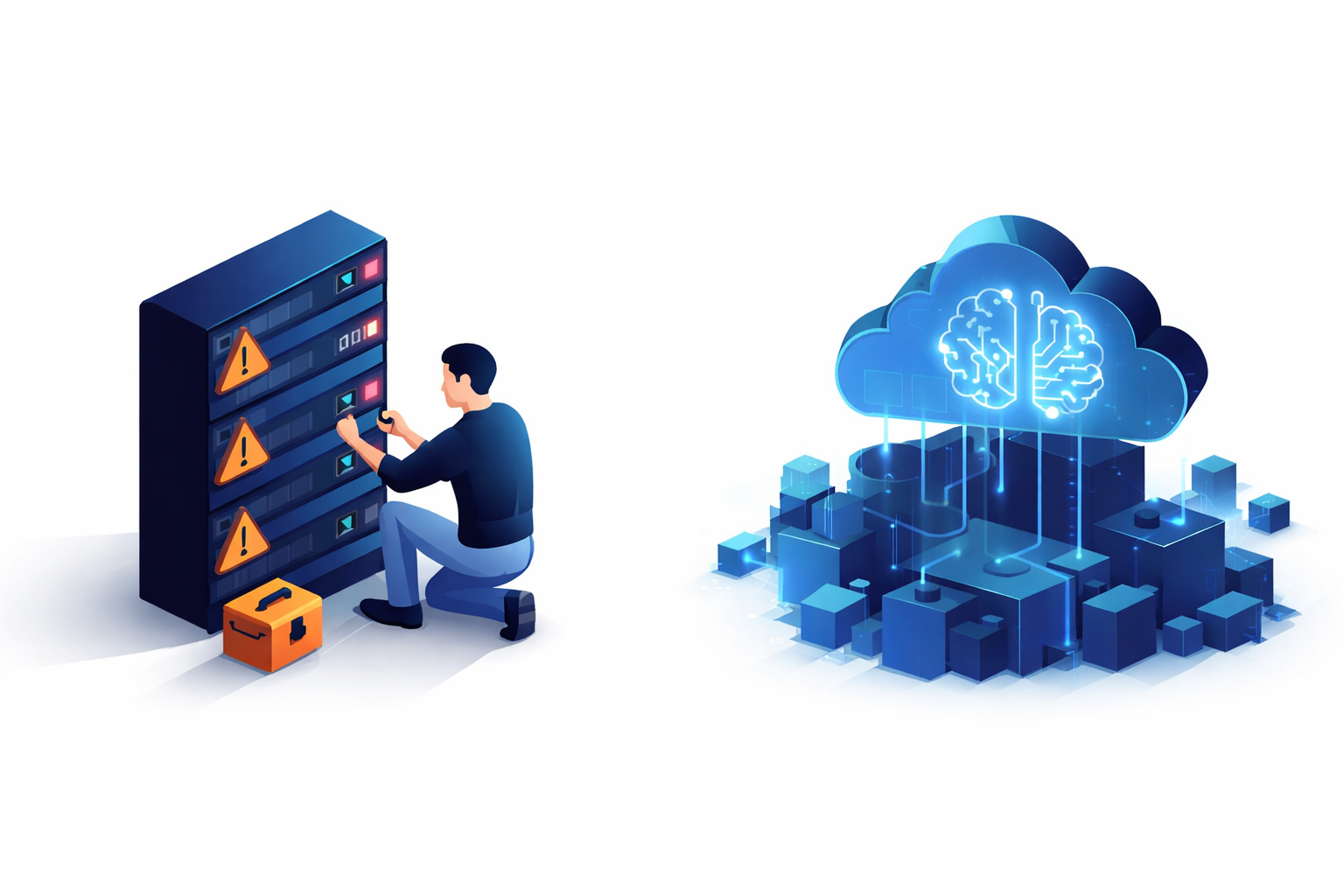
TL;DR: Reactive IT operations are typically caused by fragmented incident signals, disconnected documentation environments, and automation workflows that execute without cross-system awareness. Organizations implementing governed AI operations layers frequently reduce duplicate incident noise by up to 30–50% and accelerate resolution timelines by as much as 40% through cross-platform correlation and knowledge retrieval automation.
Most enterprise IT environments operate across 10–25 operational platforms daily. Because monitoring alerts, ticketing workflows, documentation systems, and collaboration environments operate independently, infrastructure teams spend significant time coordinating responses instead of resolving root causes.
According to PagerDuty’s Incident Response Benchmark Report, nearly 50% of responders report spending more time coordinating incidents than resolving them. As a result, incident-correlation infrastructure increasingly operates inside environments such as cross-platform incident correlation architectures, where monitoring signals remain synchronized with documentation workflows and execution environments simultaneously.
“Fragmented incident signals—not staffing limitations—are the primary reason modern infrastructure teams remain reactive.”
What Is a Governed AI Operations Layer?
A governed AI operations layer connects monitoring alerts, institutional knowledge environments, and workflow execution infrastructure across systems while maintaining visibility, auditability, and operational control. Instead of triggering isolated automation workflows, governed architectures coordinate execution decisions using cross-platform context awareness.
“Reactive IT operations are usually a coordination problem between systems—not a staffing problem.” Modern infrastructure organizations increasingly treat incident-correlation environments as operational intelligence infrastructure rather than workflow automation utilities.
As organizations scale across SaaS platforms, endpoint infrastructure, identity providers, and monitoring environments, correlation logic increasingly integrates with environments such as enterprise knowledge retrieval architectures, ensuring resolution workflows remain synchronized with historical incident patterns and vendor-resolution visibility simultaneously.
Why Reactive IT Operations Persist Across Modern Environments
Manual coordination across monitoring tools, ticketing systems, documentation environments, and collaboration platforms introduces duplicate incident activity, delayed resolution timelines, and hidden institutional knowledge dependencies across infrastructure teams.
Industry benchmarking research from Atlassian shows teams can lose up to 20% of working time searching for internal knowledge that already exists across documentation environments. Knowledge-retrieval latency directly affects MTTR performance and infrastructure reliability consistency.
Modern incident-response environments increasingly operate alongside architectures such as duplicate incident clustering frameworks, ensuring alerts remain correlated across monitoring systems before escalation workflows begin.
Why Workflow Automation Alone Doesn’t Resolve Incident Coordination Problems
Workflow automation platforms connect actions between systems but typically do not evaluate incident relationships across environments before triggering execution logic. As a result, automation improves workflow speed without improving coordination accuracy.
Organizations implementing governed correlation infrastructure frequently treat automation triggers as execution endpoints rather than decision-making infrastructure inside environments such as context-aware workflow orchestration architectures, where signals remain aligned across monitoring systems, collaboration platforms, and documentation environments simultaneously.
- duplicate incident detection
- cross-platform signal correlation
- historical-resolution retrieval
- context-aware workflow execution
- documentation synchronization
- infrastructure visibility alignment
What Changes When Incident Signals Operate as One Environment
Organizations implementing governed correlation infrastructure typically shift from ticket-level response workflows toward environment-level incident management visibility. Instead of responding individually to alerts across platforms, teams resolve incidents once across systems.
Organizations implementing cross-platform incident-correlation environments frequently reduce resolution timelines by up to 40% through faster root-cause identification and historical-resolution reuse.
Correlation environments increasingly integrate with architectures such as infrastructure orchestration coordination layers, ensuring monitoring alerts remain synchronized with documentation workflows and execution environments simultaneously.
Key Signals Used in Governed AI Operations Layers
High-performing correlation architectures evaluate multiple contextual infrastructure signals simultaneously before triggering workflow execution decisions.
- monitoring alert relationships
- duplicate ticket detection
- documentation retrieval signals
- vendor-resolution history
- identity-provider activity signals
- endpoint infrastructure visibility
- collaboration-platform incident clustering
Implementation Roadmap for Governed AI Operations Infrastructure
- Stage 1: monitoring signal correlation
- Stage 2: documentation retrieval alignment
- Stage 3: duplicate incident clustering
- Stage 4: workflow execution governance
- Stage 5: infrastructure-wide orchestration visibility
Advanced organizations extend correlation infrastructure into broader environments such as enterprise operations orchestration architectures to synchronize monitoring visibility with documentation environments and execution workflows simultaneously.
Frequently Asked Questions About Governed AI Operations Layers
What is a governed AI operations layer?
A governed AI operations layer connects monitoring alerts, documentation systems, workflow automation triggers, and execution environments across platforms while maintaining visibility, auditability, and infrastructure control.
Why do IT teams stay reactive even after automation?
Automation platforms typically execute workflows without correlating signals across environments. Without cross-platform awareness, duplicate incidents and knowledge fragmentation continue affecting response timelines.
How is this different from workflow automation platforms like Zapier or Make?
Workflow automation platforms connect actions between tools. Governed AI operations layers connect intelligence between systems so incidents remain correlated before workflows execute.
Does a governed AI operations layer replace existing IT tools?
No. Governed operations layers operate across existing infrastructure environments to coordinate signals between systems rather than replacing the tooling stack.
Co-founder & CEO at Engini.io
With 11 years in SaaS, I've built MillionVerifier and SAAS First. Passionate about SaaS, data, and AI. Let's connect if you share the same drive for success!